The sovereignagentic platform.
huoku aggregates all organizational knowledge into a unified intelligence layer, then deploys configurable AI agents that use that knowledge to perform real work. Always a dedicated single-tenant cluster: on European cloud, in your own cloud account, or fully on-premise.
How huoku works.
Both halves of the platform work as one: a knowledge pipeline that turns your sources into a searchable index, and agents that use that index to reason and call tools.
From sources to index
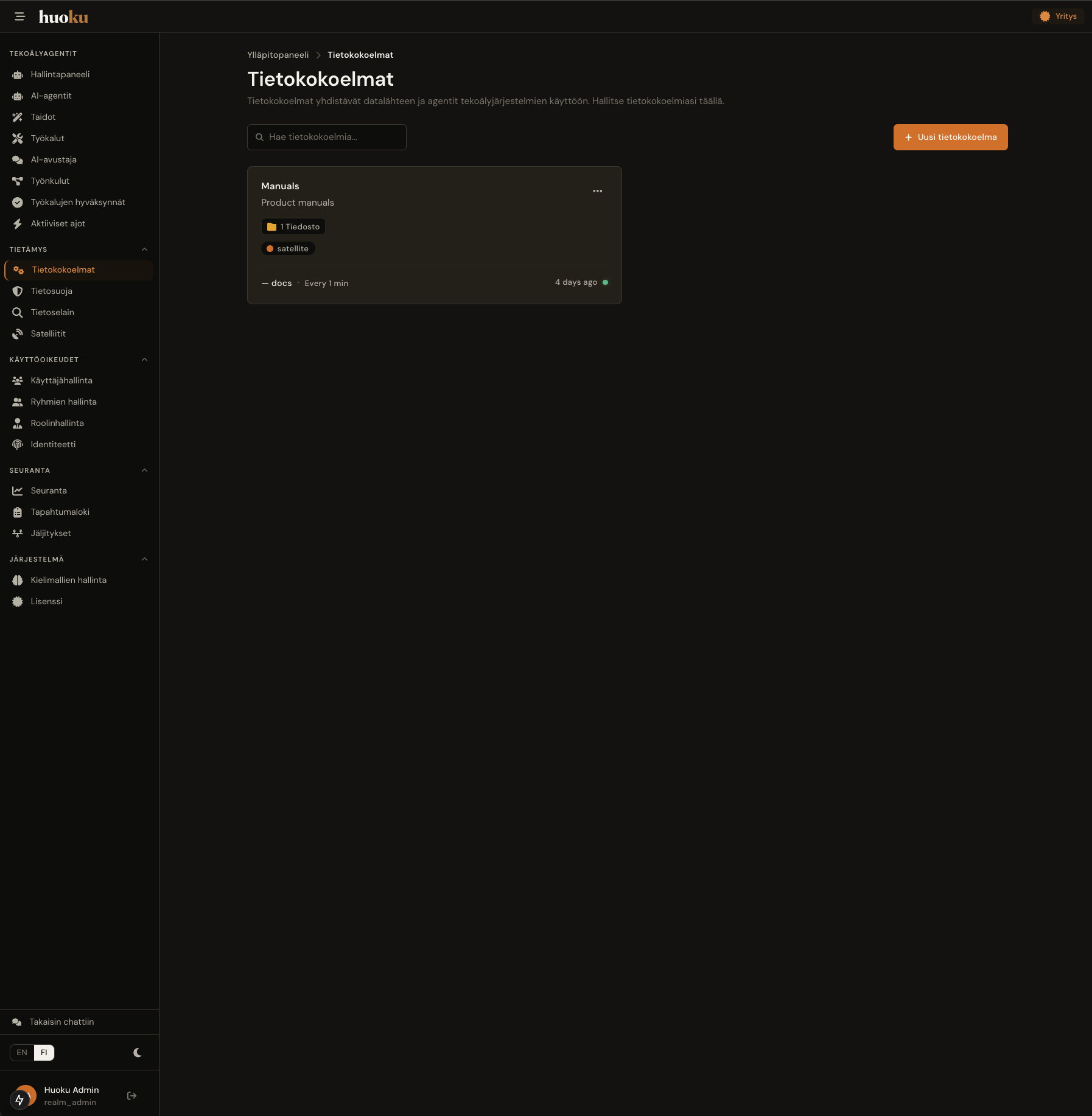
Satellite crawlers watch your connected systems for new, updated, and deleted documents. Content is parsed, chunked intelligently, run through Data Guard for PII masking, embedded into vectors, and indexed in OpenSearch.
From index to action
Beyond retrieval, agents call APIs, combine sources, and execute workflows in the background. Managed from a single panel.
- 1A trigger initiates the workflow: incoming email, Slack mention, API call, Kafka event, webhook, or a schedule.
- 2The agent activates, accesses the knowledge base, and reasons about what to do.
- 3The agent executes skills (multi-step workflows) and uses tools (actions via connectors).
- 4It can delegate to sub-agents for specialized tasks.
- 5Actions are delivered: email sent, API called, event published, webhook fired.
Your agents. Your rules.
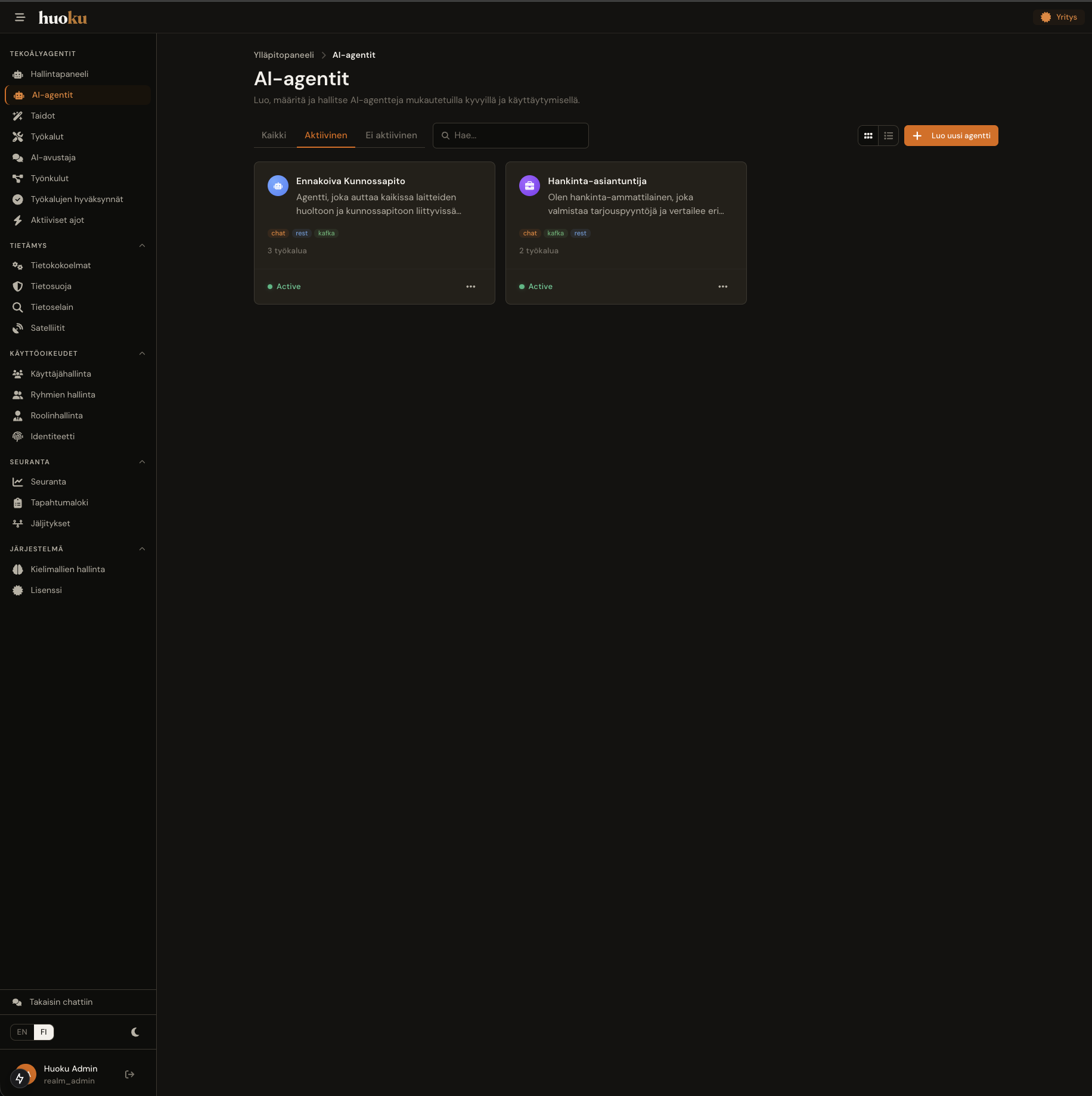
Every agent in huoku is independently configurable. Admins create and manage agents through a visual editor, with no coding and no DevOps tickets.
- System promptBehavior instructions and persona, scoped per agent.
- Knowledge accessWhich knowledge collections the agent can see.
- SkillsMulti-step workflows the agent can execute.
- ToolsConcrete actions: email, web search, read web pages, REST, Kafka, webhooks.
- TriggersWhat activates the agent: schedule, event, query.
- LLM modelModel and temperature per agent, switchable at runtime.
- Sub-agentsDelegate specialized tasks to specialized agents.
- IdentityCustom name, icon, color for every agent.
- Welcome promptsLocalized greetings and example prompts.
Agents that don't wait to be asked.
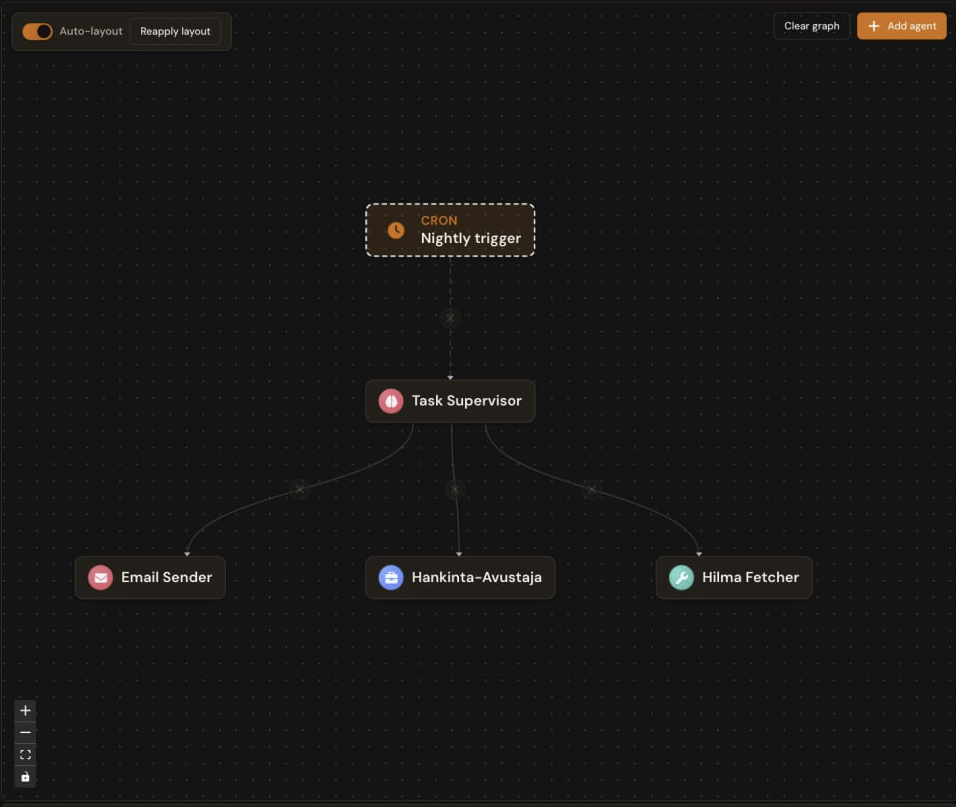
The real value of an agent platform is agents that do their own work: on a schedule, reacting to events, delivering results before anyone notices the problem. huoku's workflow engine turns any agent into a 24/7 worker.
Daily sick-leave report
Aggregates absences from HR systems, flags patterns, drops a summary in Teams every morning.
Check machine metrics, alert if needed
Reads OPC-UA streams against the threshold playbook, opens a work order when an anomaly crosses confidence 0.9.
Watch new Hilma announcements
Pulls the latest public-tender notices, filters by relevance, drafts a go/no-go memo for the procurement lead.
Trigger
Schedule (cron-like), Kafka event, webhook, REST call, or on-demand from chat. The strip says how it starts.
Agent
Any configured agent can be wired to a workflow, reusing the same knowledge access, tools, and identity.
Owner
Every workflow runs under an identity. Permissions and audit logs follow the owner, not a service account.
All runs land in monitoring with full traces. If a step fails, you see exactly where, and which retry policy fired.
Connects to everything. Depends on nothing.
The same agent answers an employee in chat, responds to a REST call from an integration, and listens on Kafka for real-time workflows. One management plane, many channels.
Chat interface
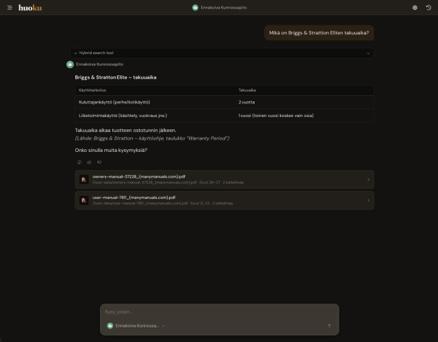
Browser-based chat for employees. Conversation history, source citations with PDF page numbers, agent-specific welcome prompts. Each user sees only the data they're authorized to.
- Source citations on every answer
- Per-user conversation history
- Pin documents to a conversation, and the assistant remembers personal preferences over time
- User permissions inherited down to chunk level
Protocols and APIs
Programmatic access for custom integrations.
Event-driven integration for real-time workflows.
Exposes knowledge to huoku's own agents, and optionally to external AI assistants (Claude, Copilot, and others).
Agent-to-agent interoperability for multi-agent systems.
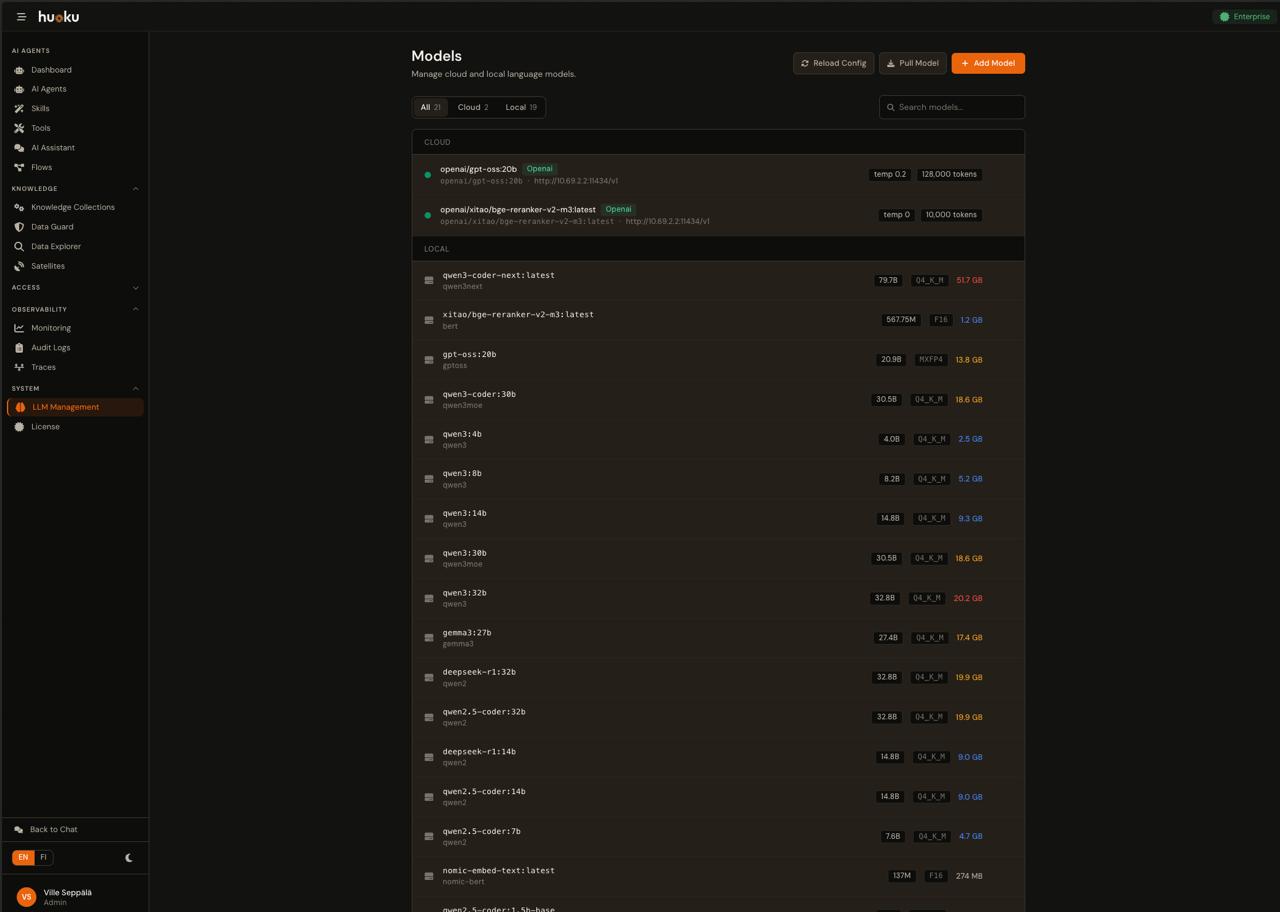
One platform, any model.
EU-hosted open models by default, so inference stays in Europe. Fully local models on your own hardware via Ollama or vLLM, so nothing leaves the building. Or any external provider you choose. The model is your decision, per agent and per task, switchable at runtime without a restart.
- EU-hosted open models (our default recommendation)
- Fully local via Ollama or vLLM (air-gapped)
- Azure AI
- OpenAI · Anthropic · Google
- OpenRouter and others
Security is not a feature. It's the architecture.
Every chunk, query, and answer carries an identity. Permissions follow the data from source system to final answer, without unbundling or duplicating your existing access model.
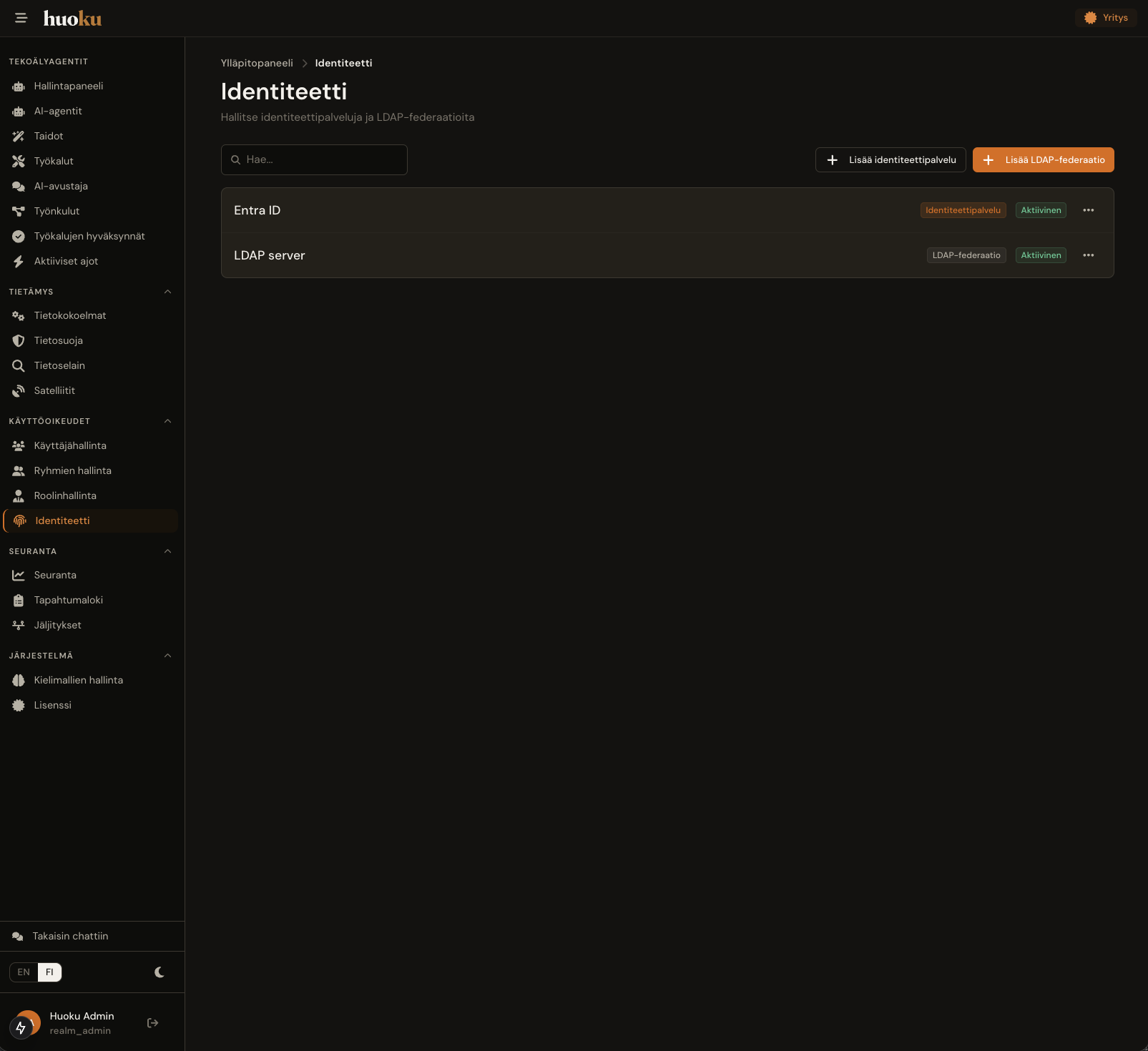
Identity and access
- Keycloak OIDC with PKCE
- Role-based access control: Admin, User, Viewer
- Permissions inherited from source systems: a person only gets answers from documents they could open themselves
- Agent-level permissions: each agent's knowledge and tool access granted explicitly
- Per-user chat isolation
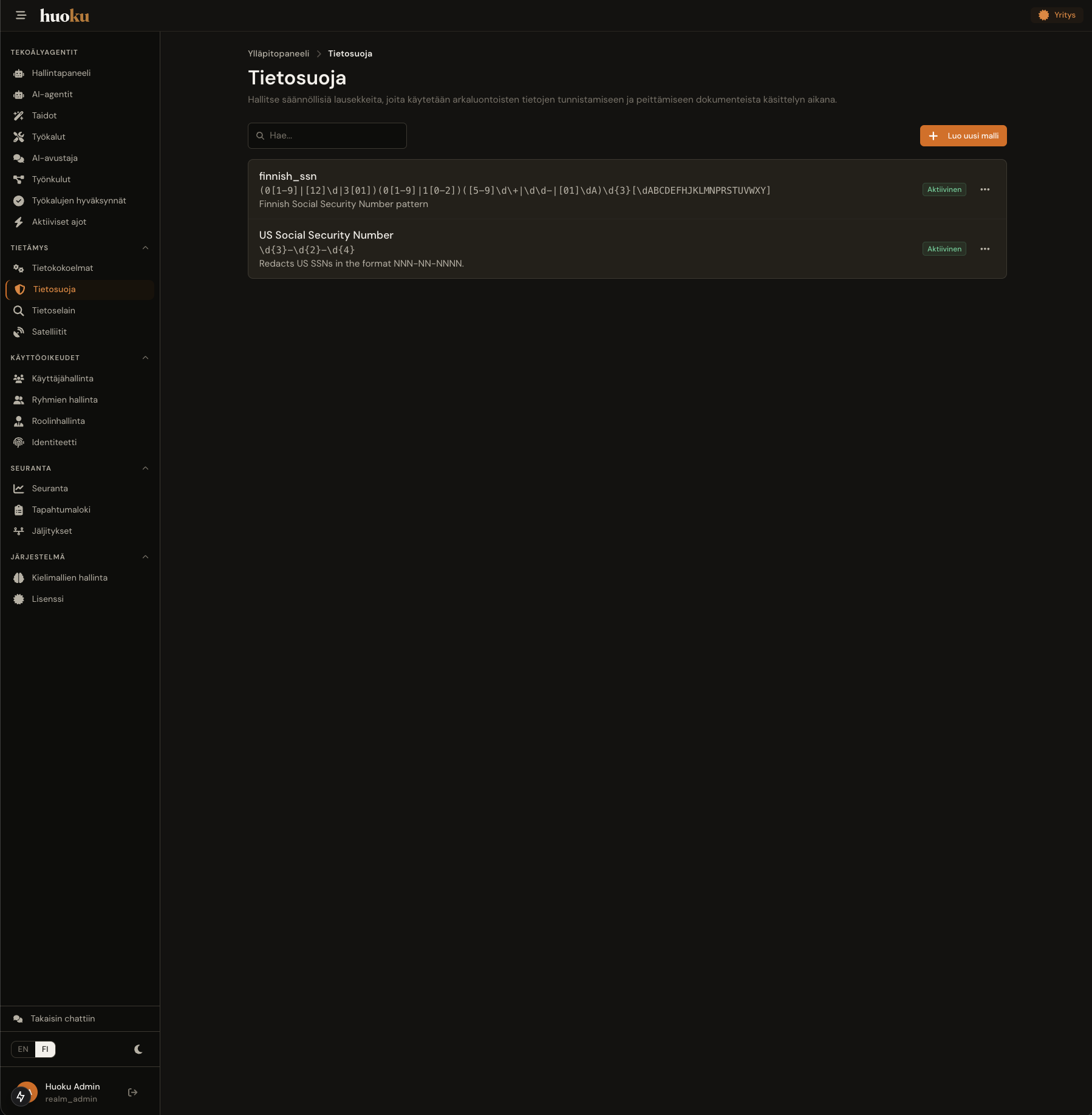
Your data stays under your control
- Data Guard PII masking in the knowledge pipeline: sensitive identifiers never enter the index
- Data processed and stored in Europe, on a dedicated single-tenant cluster, or fully on-premise
- Encryption at rest (Fernet AES-128-CBC + HMAC-SHA256) and inter-service mTLS on Kafka
- TLS on all HTTP traffic with automated cert-manager renewal
- No backend service directly exposed to the internet
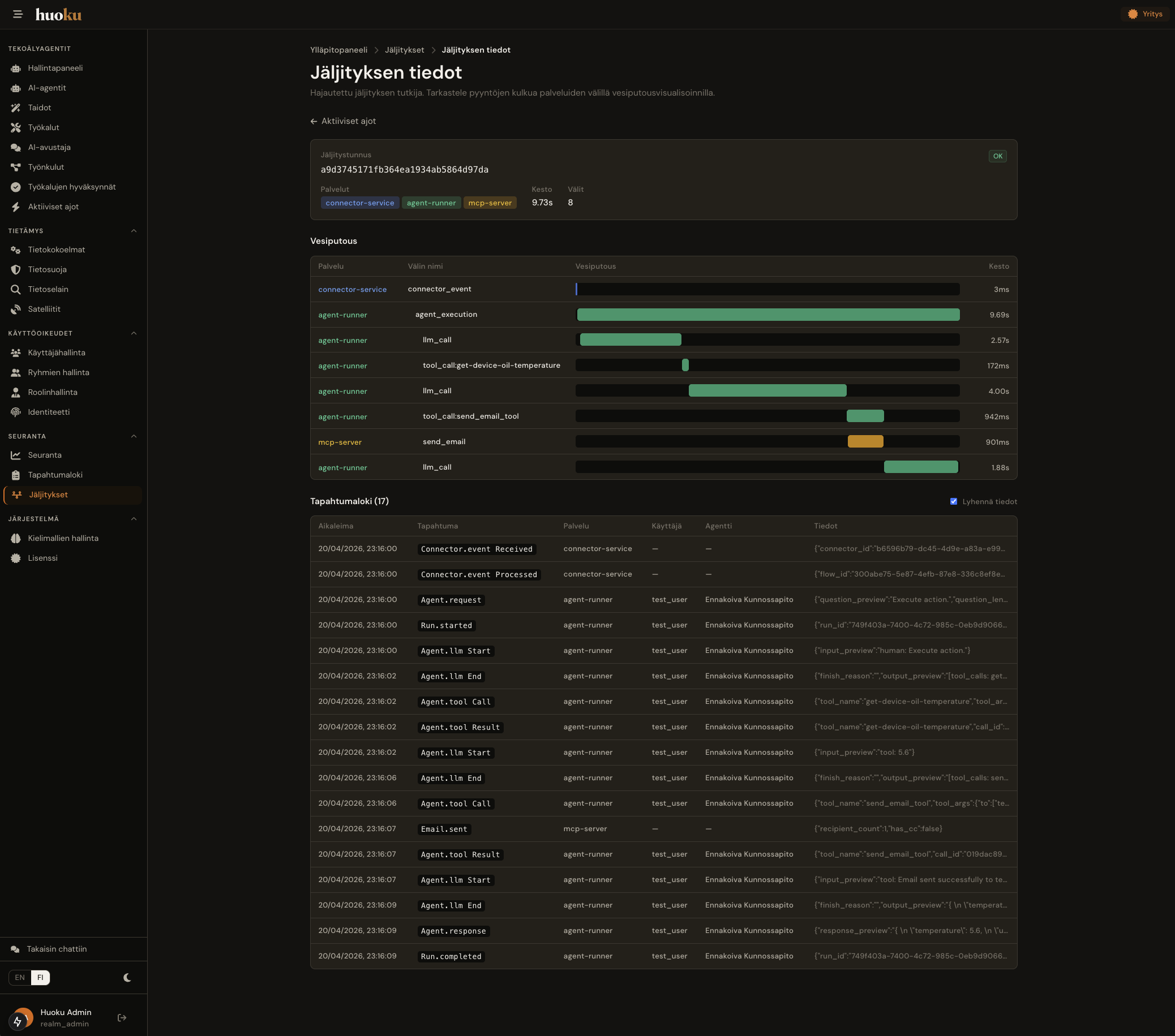
Every step, auditable
- Uses prohibited by the EU AI Act (Article 5) blocked automatically, at agent creation and at every run
- Auto-generated, always-current system cards: the technical documentation the Act requires
- Sensitive actions can require human approval; live view of every run, stoppable instantly
- Full audit trail of all agent activity, tool invocations, and search queries, with configurable retention
- GDPR-ready: content that cannot be safely processed is quarantined
- Air-gapped deployment option with local models
AI on a cluster that's yours alone.
On your terms.
Tell us about your workflows. Together we'll identify 2-3 processes worth automating and deploy a pilot on a dedicated cluster, on European cloud or your own infrastructure. Agents work on real tasks within weeks. We reply within two business days.